Tuesday, 21 February 2017

WAYS TO KEEP YOUR BODY FIT AND HEALTHY

          WAYS TO KEEP YOUR BODY FIT AND HEALTHY


 Life is too short but a healthy body can make it longer, productive and more active. A few simple , natural guidelines which can help you develop various healthy habits which contribute to a healthier lifestyle.

  • EAT HEALTHY FOODS - Having healthy diet provides the body with various vital nutrients. A diet rich in nutrients consists of eggs, poultry, fish, whole grains,unsaturated fats ( olive oil, avocado). It helps you feel more energetic and help your body to function properly.
  • REGULAR EXERCISE-  Regular exercise helps in maintaining a healthy weight, strengthens your bones and muscles, contributes to a better mood and overall mental - health.  
  • GET ENOUGH SLEEP -  Getting adequate amount of sleep is also very important. Repair of heart and blood vessels occur only when you are asleep. Sleep helps in balancing the hormones of your body and plays a vital role in the body's growth and development.
  • REDUCE STRESS -  Stress management in our busy, hectic lives contribute to a healthy body. Effective ways of managing stress and keeping the body healthy can be yoga, meditation, exercise and stress reduction programmes.
  • DRINK WATER -  Keeping your body hydrated with water is very essential . Water regulates body temperature , acts as  carrier of the nutrients and waste materials of the body , keeps the blood pressure in check.

LIMIT YOUR VICES   

1. QUIT SMOKING
2. QUIT ALCOHOL CONSUMPTION
3. AVOID DRUG ABUSE
4. DON'T GET INTO PHYSICAL FIGHTS
5. STOP SPEEDING
6. STOP SEEKING EXCESSIVE THRILL


Thursday, 16 February 2017

Drink Water Stored in a Copper Vessel to Reap Numerous Health Benefits...


Drink Water Stored in a Copper Vessel to Reap Numerous Health Benefits...
#Copper is an essential trace mineral that is vital to human health. It has antimicrobial, antioxidant, anti-carcinogenic and anti-inflammatory properties. It also helps neutralize toxins.
Drinking 2 to 3 glasses of water that has been stored in a copper vessel is another easy way to supply your body with enough copper.
Top 10 health benefits of drinking water stored in a copper vessel..
# Prevents Water-Borne Diseases
# Keeps the Digestive System Healthy
# Aids Weight Loss
# Promotes Healthy Skin
# Beats Anemia
# Slows Down Aging
# Stimulates Your Brain
# Fights Inflammation
# Regulates Thyroid Gland

Tuesday, 14 February 2017

                          DIAGNOSING  HAIR  LOSS  

Diagnosing any medical problem has direct relevance to its treatment. In case of hair loss also, before recommending any best hair solution , one has to arrive at the diagnosis. There are some aspects that need to be evaluated before making any diagnosis :-

1. MEDICAL HISTORY- To determine the  cause of hair loss, your doctor can ask you variety of questions about when hair loss began , what the patterns of hairloss are , what kind of hair styles you usually wear , whether hairloss runs in your family and other details about your symptoms.

2. PHYSICAL EXAMINATION- Examination of your scalp to check for inflammation, redness, sores or scarring. Close view of your hair to determine how much hair is being lost , the pattern of hair loss etc. It includes :-

(a) PULL TEST AND TUG TEST - This test measures the severity of hairloss , during this test small sections of hair say 40 strands are grasped from different parts of the scalp and gently tugged , if six or more strands fall out , you have what's known as active hairloss.

(b) TUG TEST -  During a tug test, the doctor grasps a section of hair and holds it with two hands. one near the root and one near the tip, then tugs to see if any of the strands  break in the middle. This gives information about the brittleness or fragility of your hair strands. 

3. TRICHOMETRIC ANALYSIS - In trichometric analysis, a computerized tool is used to analyze characteristics of the scalp and hair. A digital assessment system called folliscope consisting of high definition microscopic camera. It gives information about hair coverage , including the total no of hairs on the scalp and the diameter of each strand of hair .


4. PUNCH BIOPSY - If there are lesions on the scalp that could be caused by more than one form of hairloss, you may require a scalp biopsy and this biopsy is called as punch biopsy . In this a small device is used to puncture the scalp and remove a small tissue sample . This sample is sent to lab for testing the type of hair loss.

5. BLOOD TESTS - There are some chances that there may be some underlying medical conditions involved in hair loss, this can be evaluated only through blood tests.


Tuesday, 31 January 2017

                         COMMON HAIR PROBLEMS


Common problems affecting the hair and scalp include hair loss, infections, and disorders causing itching and scaling.

Hair loss (alopecia) is a frequent concern for both men and women, although it is normal to shed some hair each day. People who experience more than normal hair loss may have the inherited tendency to "common baldness." Male pattern baldness is the most common cause of hair loss in men, with a receding hair line and baldness on the top of the head. Women may develop female pattern baldness in which the hair becomes thin over the entire scalp. Alopecia areata causes hair loss in small, round patches while tight elastics or braids may cause hair loss at the hairline (traction alopecia). Certain diseases (eg, thyroid problems, diabetes, and lupus), medicines, or poor nutrition may also cause hair loss. 

Infections of the scalp include bacterial infection of hair follicles (folliculitis), infestation of head lice (pediculosis capitis), and fungal infection of scalp ringworm (tinea capitis). Itching and excessive flaking of the scalp is seen with both dandruff (seborrheic dermatitis) and psoriasis.

MOST COMMON HAIR PROBLEMS :-


1. Alopecia areata -


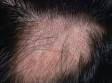
This image displays a close-up of the scalp with a round area of non-scarring hair loss typical of alopecia areata.. 
  • Alopecia areata is an autoimmune condition resulting in hair loss.  
  • Genetic and environmental factors play a role in hair loss; the condition may be seasonal as well.
  • Hair loss may be patchy or sparse and may involve the rest of the body in addition to the scalp. 
2. Head Lice ( Pediculosis capitis ) -


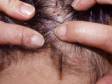
In this scalp infested with head lice, there are 2 scabs from scratching and a few white nits on the hair shaft (which look like flakes of dandruff but are actually glued to the hair).

  • Head lice (pediculosis capitis) are highly contagious, and the most prominent symptom of a head lice infestation includes intense scalp itching.
  • The human head louse is a tiny insect that feeds on human blood. The female louse lays eggs (nits) on the hair shaft close to the scalp, and they become glued to the hair shaft.
  • The nits hatch about 8–10 days later and begin to feed with any remaining adults. The nits can stay alive for a long period of time off of the body, such as on hairbrushes, furniture, or linens.

  • 3. Ringworm, Scalp,( Tinea capitis )-

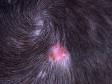
    Tinea capitis (a fungal scalp infection) typically has round areas of hair loss with scaling and redness of the scalp.

    • Tinea capitis is the medical term for ringworm, a very common fungal infection, of the scalp.
    • There are no worms involved in scalp ringworm, rather the rash forms a scaly, round patch that sometimes clears or improves in the middle, thus looking like a ring.
    • Ringworm can occur on other parts of the body, but scalp ringworm is commonly seen in children. It is contagious and is acquired by contact with infected people, animals, or objects (such as towels, combs, and pillows). 
    • Scalp ringworm should be treated (by a prescription medicine your doctor can prescribe) because it is contagious and because, if left untreated, the affected area can develop hair loss and sometimes another, more serious, infection called a kerion. 


    Friday, 6 January 2017

                             FEMALE PATTERN HAIR LOSS


    About one- third of women experience hair loss at some time in their lives, Hair loss often has a great impact on women than men, because it's  less socially acceptable for them. Alopecia can severely affect a women's emotional well- being and quality of life.In women , androgenetic alopecia begins with gradual thinning at the part line, followed by increasing diffuse hairloss radiating from top of the head . 

    CAUSES :-

    • FPHL has a strong genetic predisposition.
    • The mode of inheritance is polygenic, indicating that there are  many genes that contribute to FPHL, and  these genes could be inherited from either parent or both. Currently, it is not clear if androgens play a role in FPHL or not.
    •  The role of oestrogen is uncertain. FPHL is more common after the menopause suggesting oestrogens may be stimulatory for hair growth. 


    Image result for 5 signs to predict hair loss in case of females
                        PATTERN HAIR LOSS

    TREATMENTS AVAILABLE :-  


    • Use of minoxidil orally all over the scalp.
    • Low level laser therapy.
    • Mesotherapy and PRP ( PLATELET RICH PLASMA).
    • Cosmetic camouflages include colored hair sprays to cover thinning areas on the scalp, hair bulking fibre powder, hair wigs.
    • Hair transplant.


    Wednesday, 21 December 2016

    Why Flax Seeds are Good for your Hair

    3 Reasons why Flax seeds are good for your hair..

    1-Flax seeds contain essential vitamins for hair

    Flax seeds are full of essential vitamins and minerals which provide nourishment to the hair follicles and encourage stronger and healthier new growth. A daily dose of flax seeds will keep you and your hair beautiful.

    2-Flax seeds are high in Omega-3 fatty acids

    Omega-3 fatty acids help you avoid a dry, scaly scalp, and nourish your hair. It also increases the hair elasticity – which means less breakage. Plus it can help reduce dandruff, eczema, and other skin conditions.

    3-Flax seeds are a good source of fiber

    Flax seeds are a great source of fiber – both the soluble and insoluble types. Eating flax seeds will keep your gut in good health, and facilitate the absorption of vital nutrients. And health gut equals a healthy body and of course healthy hair.

    How to Eat Flax seeds?

    *Always eat flax seeds after dry roasting them in a pan or oven before eating.This way they are easy to chew and plus roasting eliminates anti-nutrients in the seeds which can block the absorption of other mineral.
    *Add in your salads or make chutney, which you can add to your sandwiches or stuffed bread (parathas), etc.
    *You can also grind the roasted flax seeds, and use them in your diet. 
    Since flax seeds are slimy and sticky, make sure to take them with plenty of water or other liquids to increase their mobility in your gut.

    Wednesday, 14 December 2016

    ANATOMY OF HAIR FOLLICLE

                            ANATOMY OF HAIR FOLLICLE


    Hair Structure

    A hair can be defined as a slender, thread-like outgrowth from a follicle in the skin. The hair are present all over the body, except for the sole, palm, lips. Hair is composed of structural protein called keratin. This is the same kind of protein that makes up the nails and the outer layer of skin .

    Hair comprises of three morphological regions - the cuticle, medulla, and cortex
    • An innermost layer or medulla which is only present in large thick hairs.
    • The middle layer known as the cortex. The cortex provides strength, color and texture of the hair.
    • The outermost layer is known as the cuticle. The cuticle is thin and colorless. It serves as a protector of the cortex.
    Structure of the hair root
    Hair root lies below the skin, which is enclosed within a follicle. At the base of hair follicle is the dermal papilla. The dermal papilla is fed by the blood vessels which carries nourishment to produce new hair. The dermal papilla is very important for the growth of the hair as it contains receptors for male hormones and androgens. The presence of these receptors is responsible for the androgenic alopecia


    Image result for anatomy of hair